The Challenge
Affordability and Competitiveness
Electricity rates are rising at an unprecedented speed, outpacing the cost of living and wage growth. For many in North Carolina, it forces families to make the tough decision between putting food on the table and paying utility bills. In fact, during the COVID pandemic, it was estimated that nearly 16% of all North Carolina Duke customers were significantly behind on their bills. Additionally, there are more than 400,000 households across North and South Carolina who live at 50% of the federal poverty line and face an energy burden of at least 30% (30% of income spent on utility bills). Recent trends are likely to intensify these affordability concerns in the state, lending the need to establish near-term energy policy solutions.
These challenges don’t just impact residential customers. For many commercial customers, utilities account for some of the largest percentages of operating costs. Therefore, energy affordability and the availability of energy to power operations often rank amongst the top considerations when selecting a new site. Providing access to affordable, reliable energy is imperative to ensuring North Carolina remains the nation’s ‘Top State for Business.’
Electricity Rates are Rising
On average, residential utility customers across North Carolina have seen more than a 23% increase in electricity rates over the past 5 years. The trend does not seem to be slowing with recently proposed rate increases.
23%
Average increase in electricity rates over the past five years
North Carolina Residential Rate Increases
Source: US Energy Information Agency
NC Utilities Commission Approved Rate Increases
Source: NC Utilities Commission Filings
2.4%
Proposed customer bill increases each year over the next 15 years*
* According to Duke Energy’s 2025 Carolinas Resource Plan proposal.
The Latest
Another rate increase may be coming to Duke Energy customers if its new proposal is approved by state regulators. The company filed revised rate requests with the North Carolina Utilities Commission Thursday for both Duke Energy Carolinas and Duke Energy Progress customers.
Duke Energy is making plans to meet a sharp, unexpected growth in North Carolina's electric usage. A new filing from the North Carolina Utilities Commission shows the rate of growth for Duke Energy's electric usage load is currently 8 times higher than the peak load projected in 2022.

Artificial intelligence has developed rapidly in recent years, with tech companies investing billions of dollars in data centers to help train and run AI models. The expansion of data centers has raised questions on several fronts, including the effect these facilities may have on energy and the environment as the United States seeks an edge in the global AI race.
What’s Going On?
Looking Back
Current Residential North Carolina Utility Bill Cost Breakdown
Costs incurred by residential customers across North Carolina stem from ongoing electric system maintenance costs, our current generation portfolio mix, fuel costs for resources requiring fuel inputs, and transmission and distribution system upgrades. All seen in the chart to the left. Volatility in fuel costs since 2017 has been a primary driver in residential electricity bill increases - accounting for 67% of increases in that time.
Looking Ahead
Duke Energy’s Projected Electricity Demand
According to Duke Energy, customer energy needs over the next 15 years are expected to be eight times the growth rate of the past 15 years.
Duke Energy’s Projected Electricity Demand
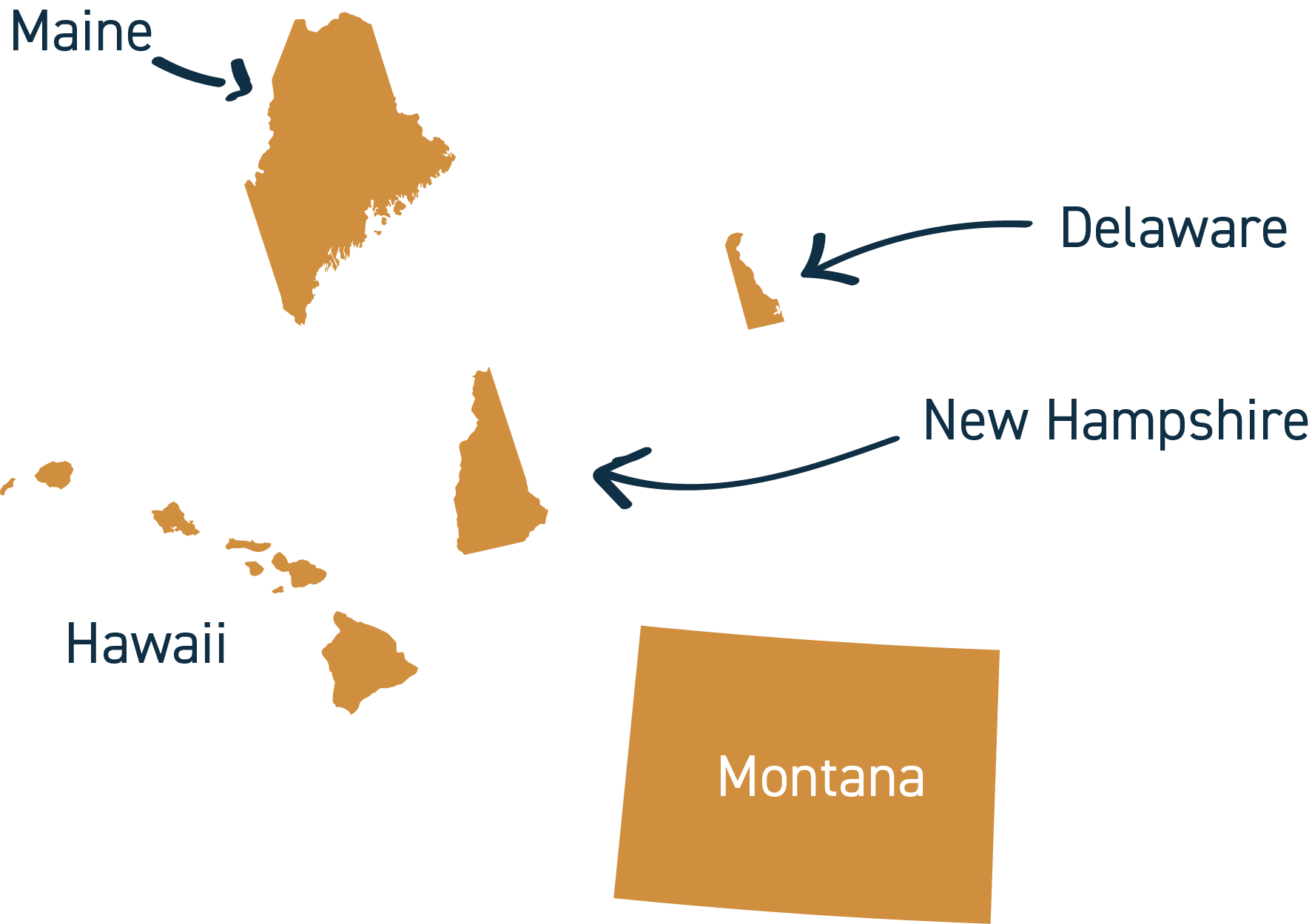
In order to manage growth, utilities in North & South Carolina will need to add the generation equivalent to powering these five states.
Costs
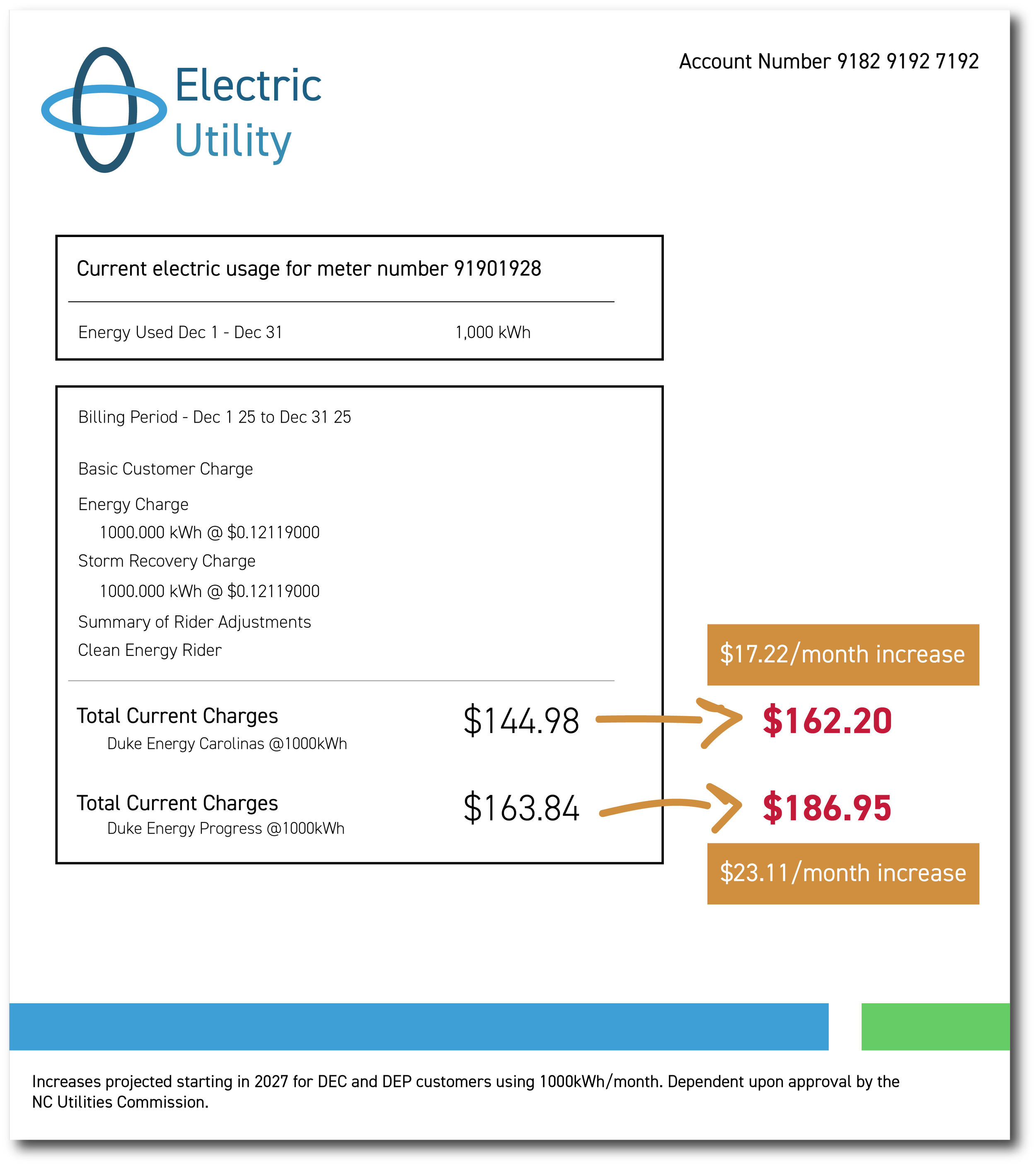
Current Average NC Monthly Electric Bill
$144.50
Future (Proposed) NC Average Monthly Electric Bill
$162.20


Business Competitiveness
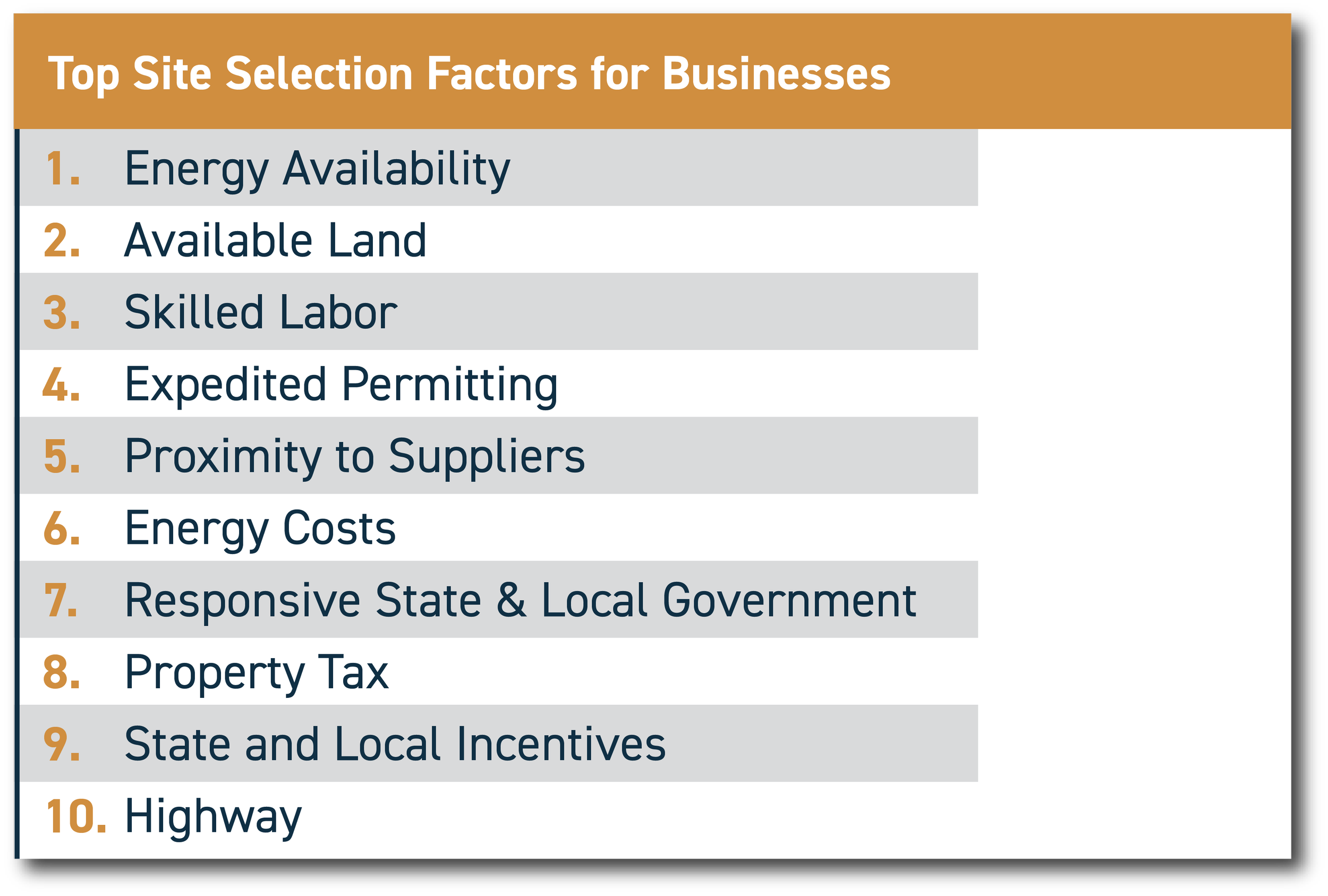
Top Energy-Related Concerns for North Carolina Businesses
Energy availability is now the top concern for businesses weighing location and expansion decisions.